
Smoothness and speed of braking depends on serviceability of all details of system. Brake discs, along with pads, are among the most loaded and prone to wear. Brake discs must be replaced every 100,000 km.
The quality of the drive, performance and driving may change this figure. The main reason for replacement is excessive wear and reduced thickness. You can quickly and reasonably replace brake discs in our car service.
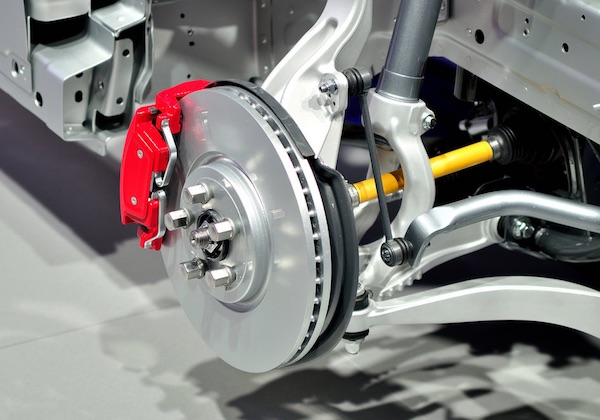
Features of design and functioning of brake disks
The brake disc has a round shape and is tightly fixed together with the wheel on the hub. During braking, the pads press on the disc, stopping the wheel. These parts of the brake system are exposed to the greatest mechanical influences and, as a result of constant friction, become thinner, acquire surface defects and deform. This directly affects the handling and safety behind the wheel.
If the brake discs are damaged or deformed, this can cause more complex faults or even complete brake failure. Improper operation of the brake system can lead to serious accidents, endangering the driver, passengers and other road users.
Taking care of safety at the appropriate level, it is necessary to timely contact the service station for preventive maintenance of the braking system. It includes complete diagnostics, repair work or replacement of components. Each vehicle manufacturer sets the desired frequency of disc replacement, but you also need to start from the peculiarities of driving and operating conditions of the machine.
The front axle is subjected to a much greater load and wears out faster than the rear. Therefore, check and replace the front axle brake discs more often.
Brake disc problems
Modern discs are made of cast iron, which is resistant to wear and hardness. But the excessive hardness of the material makes it brittle. But in the process of constant temperature fluctuations and mechanical effects, cast iron shows much better results compared to other materials. If the thickness of the cast iron is sufficient, then it will serve properly.
The material becomes thinner due to mechanical influences that lead to its abrasion. If abrasive materials such as stones, dirt or dust get between the pad and the disc, the surfaces wear out. Also, the thickness of the disk can be reduced due to damaged and not replaced in a timely manner pads.
If you notice that various defects and irregularities have appeared on the surface of the disks, come to us. The cost of replacing the brake discs in our service station fully corresponds to the declared quality of work. Don’t take any chances if you see any problems, contact us immediately.
When brake discs need to be replaced?
To determine the time of replacement of disks in time, it is necessary to constantly monitor their condition. If the wear has exceeded the allowable limit, it is likely that the following signs will appear:
- increase in braking distance;
- reducing the amount of working fluid;
- the brake pedal is much easier to press;
- skidding in one of the parties in the process of braking;
- various extraneous sounds such as noise, screaming and rattling.
If you notice at least one of these anomalies, be sure to diagnose the braking system. In the process, it is important to look closely at the pads and discs. The brake system must be inspected by qualified service personnel. Periodic monitoring of the condition of the discs is required for the front and rear pairs of wheels. In addition to the condition of the surface itself, you need to estimate the thickness.
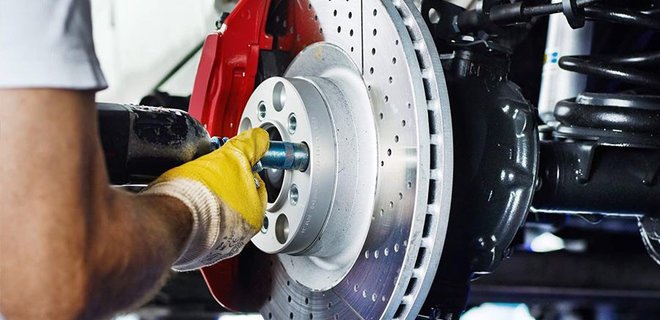
Algorithm for replacing brake discs
There are differences in the design of different car brands, but the procedure is generally almost the same. At least two professionals are required to replace the discs. Stages of work:
- Vehicle fixation;
- Removal of a wheel and braking system;
- Cleaning the hub and caliper, or replacing the bearing;
- Removal of a disk from a nave;
- Checking pads and disassembling the caliper assembly;
- Removal of a brake disk.
Installation of a new brake disk is carried out from the same algorithm, but in reverse sequence. After finishing work, it is necessary to check up brakes.